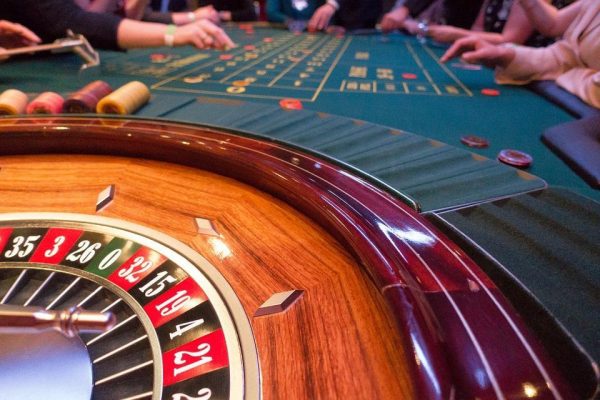
Each spin, card flip, and digital dice roll at Herospin Casino operates with a sophisticated engine designed to replicate genuine unpredictability. Canadian players connecting from Vancouver to Halifax often wonder how a piece of software can ensure fair, unbiased results without a human dealer physically shuffling a deck. The answer is found in a combination of advanced mathematics, specialized hardware, and rigorous third-party oversight. Unlike a physical slot machine that depends on mechanical decay and friction, online platforms must produce entropy from digital noise. That process transforms chaotic electronic signals into the thrilling moments players experience when a bonus round activates or a roulette ball settles perfectly on their chosen number, creating an environment built entirely on verified statistical neutrality.
The Essential Role of the RTP Percentage
Ensuring randomness is only half of the structural equation; the other half is governed by the theoretical Return to Player percentage, often abbreviated as RTP. This figure does not control what happens in a short session, but it mathematically sets the long-term statistical leakage or advantage. A slot with a ninety-six percent RTP is programmed such that over billions and billions of virtual spins, the cumulative payouts will converge almost exactly to ninety-six cents for every dollar wagered. The RNG does not have a memory chip that tracks a Canadian player’s losses to trigger a payout, nor does it coldly retract winnings when a player is ahead. That is a common misconception. The RTP emerges naturally from the probability weight tables. If a look-up table contains one million possible mapping numbers and the jackpot corresponds to only a single number, the RTP calculation simply reflects that one-in-a-million relationship, creating a flawless fusion of absolute randomness and fixed long-term economics.
Refuting Popular Misconceptions Surrounding Digital Streaks
The emotional impact of observing a roulette history board paint a long line of red numbers frequently prompts participants in Toronto and Montreal to believe a black outcome is mathematically due. This cognitive bias, known as the gambler’s fallacy, is eroded by the physics of the RNG. Digital wheels do not possess a finite pool of colors that diminishes with use. Each spin is an separate event with a clean statistical slate. A random digital system is as prone to produce ten consecutive red numbers as it is to produce a perfect alternating pattern, because past events apply zero gravitational pull on the next raw entropy sample. Similarly, a slot machine that has not awarded a bonus in two hundred spins is not getting ready. The mapping algorithm inside the game logic remains equally indifferent. Grasping this unconnected, autonomous nature of randomness transforms the experience from a hopeless battle against perceived patterns into a pure form of entertainment guided by unambiguous, irrefutable mathematics.
The Strict Licensing Framework and Canadian Compliance
Operating under the strict boundaries of Canadian regulations requires more than a simple promise of random outcomes. The RNG systems undergo exhaustive technical evaluation by accredited testing facilities that examine the source code and assess the output with diehard statistical test suites. These evaluations seek minor serial correlations, bit-level biases, and monobit frequency flaws that would be hidden to the naked eye but statistically exploitable over millions of rounds. The regulatory framework also mandates continuous runtime monitoring. If a hardware entropy source begins to decline and the randomness quality dips below a certified threshold, the affected games are promptly suspended, protecting players in British Columbia, Quebec, and the Prairie provinces from any non-random artifact. Licensed platforms must also keep detailed records of game logs, allowing an audit trail that associates a specific mathematical seed to a specific outcome, ensuring that the energetic thrill of a big win is always supported by verifiable, cold, hard data integrity.

Random outcomes at Herospin Casino are the outcome of a meticulous engineering discipline where physics-grade entropy meets artfully crafted game mathematics herospincasino.eu. The cycle of collecting thermal noise, hashing seeds, mapping numbers to reels, and verifying results through cryptographic proofs creates a fortress of integrity around every wager. From the independent auditing of the RNG algorithms to the psychological design of volatility curves, the entire ecosystem works on the principle that genuine chance is the most thrilling and ethical foundation for digital entertainment. For Canadian players, this means the focus can remain fully on the electrifying suspense of the next random moment, trusting that the invisible digital machinery works with flawless neutrality.
Cryptographically Verifiable Verification and Audit Standards
In the current Canadian digital gaming environment, trust is not anymore determined solely by a platform’s reputation; it is validated through cryptographic evidence. Herospin Casino employs a provably fair system that allows players to cross-reference game results autonomously. This is done by hashing the server seed before a game session begins and displaying that cryptographic hash to the user. After the bet concludes, the hidden seed is shown, and the player can perform the merged server-seed, client-seed, and nonce through a public validation tool. If the hash of the final seed matches the promise made before the round, it confirms algorithmically that the outcome was fixed and not tampered with post-hoc. This entirely breaks the traditional « black box » casino paradigm. Independent test laboratories, licensed by Canadian authorities, further examine the codebase and RNG systems, conducting billions of simulated game rounds to confirm that the statistical distribution remains flawless and abnormal spikes.
The Essential Technology Behind Digital Unpredictability
The foundation of every game at Herospin Casino is a Random Number Generator, commonly referred to as an RNG. This is not a simple, ready-made piece of code that recycles sequences after a few million cycles. It is a cryptographic-level system that steadily creates sequences of numbers with no detectable correlation. The generator takes a base input, referred to as a seed, and runs it through a sophisticated hashing algorithm that converts into a totally unpredictable output. What makes the system really captivating is the hardware-based layer. Modern servers use physical ring oscillators that detect thermal noise at the microscopic level. Because this thermal jitter is a true natural phenomenon, it cannot be predicted using mathematical formulas. That initial entropy is then refined to eliminate any slight statistical bias, producing a completely even distribution of likely game outcomes that fuels the full lobby.
How Algorithmic Mathematics Produces Game Results
When the raw entropy is collected and analyzed, the RNG creates a massive integer that has no inherent meaning until it is translated to a specific game mechanic through a process called as modulo operation and scaling. For a European roulette wheel, the software takes the raw number, splits it by thirty-seven, and applies the remainder to establish which pocket the virtual ball falls into. For a slot machine with five reels and hundreds of symbols, the life-changing figure is segmented into multiple indices that define the stopping position of each reel independently. The mathematics ensures that every possible combination has a precisely defined probability of occurring. Developers configure the virtual reels with weighted stops, but the RNG does not favor streaks or timing. It operates in a pure vacuum of probability, implying that even if a Canadian player hits the spin button at the exact millisecond as another player in Ontario, their unique seed data generates totally disconnected results.
The Influence of Game Volatility on User Experience
While the RNG ensures fairness, the player’s emotional journey is shaped by the volatility index linked to the game’s math model. High-volatility titles create prolonged periods of quiet, low-value dead spins, interrupted by rare but explosive bursts of massive multipliers that can transform a balance in an instant. These games are based on the same uniform random distribution as low-volatility games but distribute the RTP across fewer, heavier peaks. The random number generator is not acting aggressively during high-volatility sessions; it is simply drawing from a pay-table where the high-impact combinations are mapped to extremely narrow bands of the numeric range. A Canadian player chasing a life-altering progressive jackpot is essentially anticipating the RNG to land on a slice of mathematical real estate so minuscule that the rarity generates the staggering value. Lower volatility games map a greater percentage of the number spectrum to modest wins, creating a smoother, longer-lasting session with less dramatic bankroll swings, all under the same umbrella of true randomness.
The Mechanics of Bonus Features Without Compromising Randomness
A typical area of interest involves the way a slot effortlessly shifts from the base game into a free spins feature while maintaining the integrity of the sequence. The answer lies in dual-state handling within the game engine. When the scatter symbols appear on a winning payline, the RNG does not halt or recalibrate. It simply maintains generating numbers in a continuous stream. The game client detects the scatter combination and diverts the user interface into a secondary game mode. In the bonus round, the software continues drawing from the exact same RNG pool, but the mapping logic changes to a different pay-table designed specifically for the free spin matrix. This frequently includes richer symbol sets or expanded wilds, which mathematically boost the RTP contribution during that mode. The transition is instantaneous and upholds the strictest randomness because the entropy source is never interrupted. It assures that psychologically exciting bonus triggers are not produced by a scripted emotional algorithm but are authentic highlights in a chaotic data stream.
No responses yet